
Swirls, curls, golden embellishment…and a life dedicated to women.
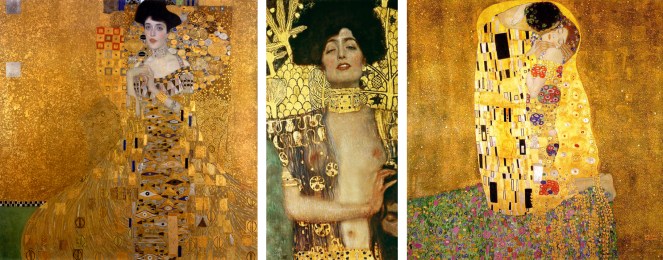
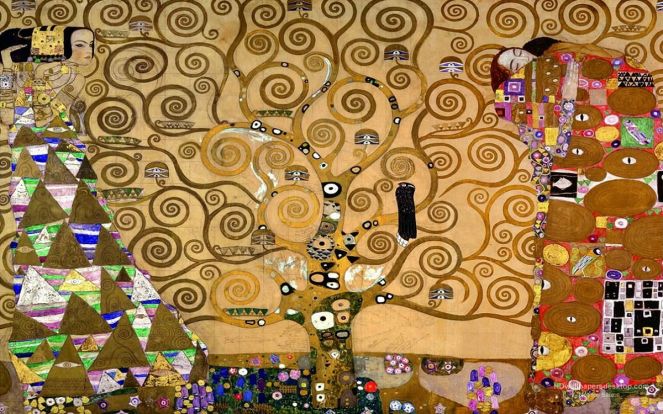
Viennese decorative artist and painter Gustav Klimt is probably best known for his murals such as the Beethoven frieze and the Stoclet Frieze, which feature a wealth of decoration, embellishment and texture. Endlessly alluring, his work is a go-to staple for artists and designers looking for some fin de siècle inspiration.
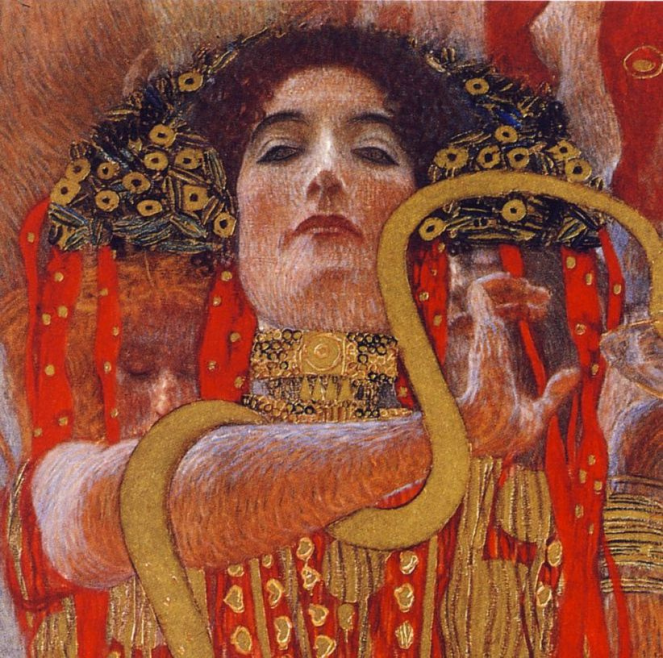
Klimt always seemed to be able to incorporate figures (usually women) bent in to un-natural poses and surrounded by masses of different pattern, detail and colour. Klimt loved women and portrayed them in almost all his work.
Best known for his portraits and figures, Klimt also produced many beautiful landscape paintings. The artist’s signature “throw a bit of everything in there” style, making his landscapes look like mysterious, overgrown wilderness-like places, true secret gardens.


The images below, I find really interesting due to their similarities, despite the fact that one is a figurative study and one is a landscape. The format that Klimt has used is virtually the same in both images! You can clearly see the similar “pyramid” shape in both images. Whether this was intentional or not, I don’t know. It is an interesting aspect of his work though.


Truly offering something for everyone, I love Klimt’s work! Lots of pattern, detail, gorgeous colours, fantastic figures and texture…perfect for a textiles teacher! I don’t get bored looking at his pieces. Not only was he a decorative artist and painter, but was one of the leading lights in Vienna’s Secessionist movement, aiming to provide outlets for young artists and designers. Having no manifesto, artists of many different genres were part of this movement.
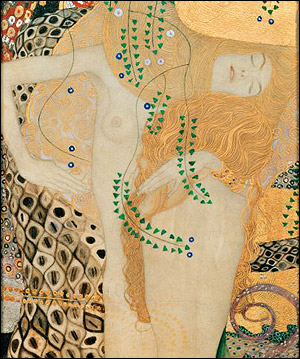
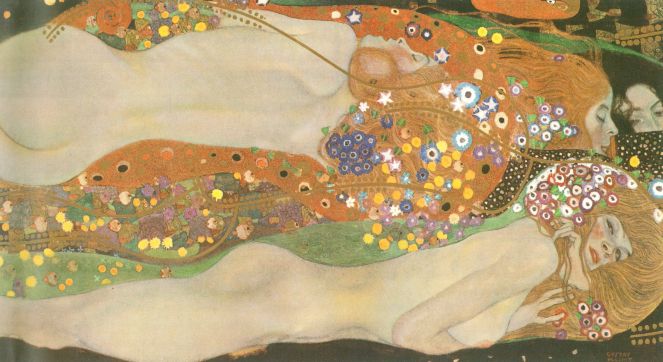
One of my absolutely favourite pieces by Klimt is the one below, “Water Serpents” I love the fluidity of it, the viewer really feels like they are looking under water at the figures and the tracery of style-ised plantlife really appears to be floating over and behind the bodies of the figures. I love the expressions on the faces of the figures and I have always wondered what they are thinking. Maybe just that whatever bath of water they were modelling in was cold!
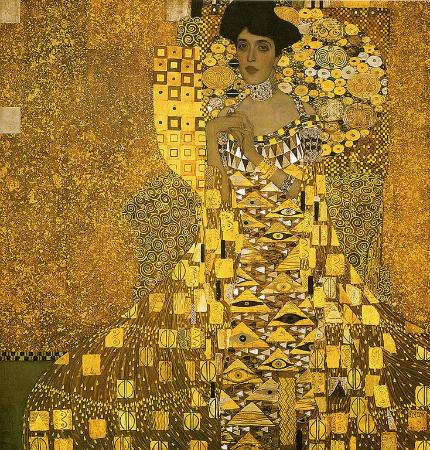
Lots of Klimt’s work is fantastic in the truest sense of the word. The immensity of detail and decoration almost makes the fact that the pieces are, essentially, just portraits neither here nor there, as the end result is about the image as a whole – the face, the story, the decoration – they all go to create the finished object, such as in this famous portrait of Adele Bloch-Bauer. When I think about Klimt’s work, it is invariably this image that first springs to mind.
 lineandthread